Montessori Mondays: The Importance of Order in the Prepared Environment
When we think of order, we often think of keeping things tidy.
A clean counter. A place for everything. A room that feels organized and put together.
And honestly, all of these things are valid. It makes many of us feel good to live or work in an uncluttered space. I know that I think more clearly and am more productive when my surroundings are tidy.
However, in Montessori, order goes much deeper than tidiness.
Order is one of the first ways a young child begins to make sense of the world around them.
The Sensitive Period for Order
Dr. Montessori observed that young children have a particularly strong sensitivity to order during the first years of life. She described this as one of the most important—and mysterious—of the sensitive periods.
From birth, the child begins taking in countless impressions of their environment. As they grow, they refine these impressions through exploration.
They notice patterns and relationships.
They organize and categorize.
They create an internal understanding of how the world works.
External order supports the development of inner order.
Order is essential to this process. During this sensitive period, order is not simply a preference – it is a developmental need. That is why it is so important in the Montessori environment.
Order Helps Us Orient
For the young child, order provides something that adults often take for granted: a sense of orientation.
When routines are consistent, when materials have a familiar place, and when the environment is predictable, the child has fewer things to figure out.
- They know where to find things.
- They know what comes next.
- They know where to put things back.
This predictability creates security and gives the child freedom to explore.
This is one reason that Montessori environments are intentionally prepared.
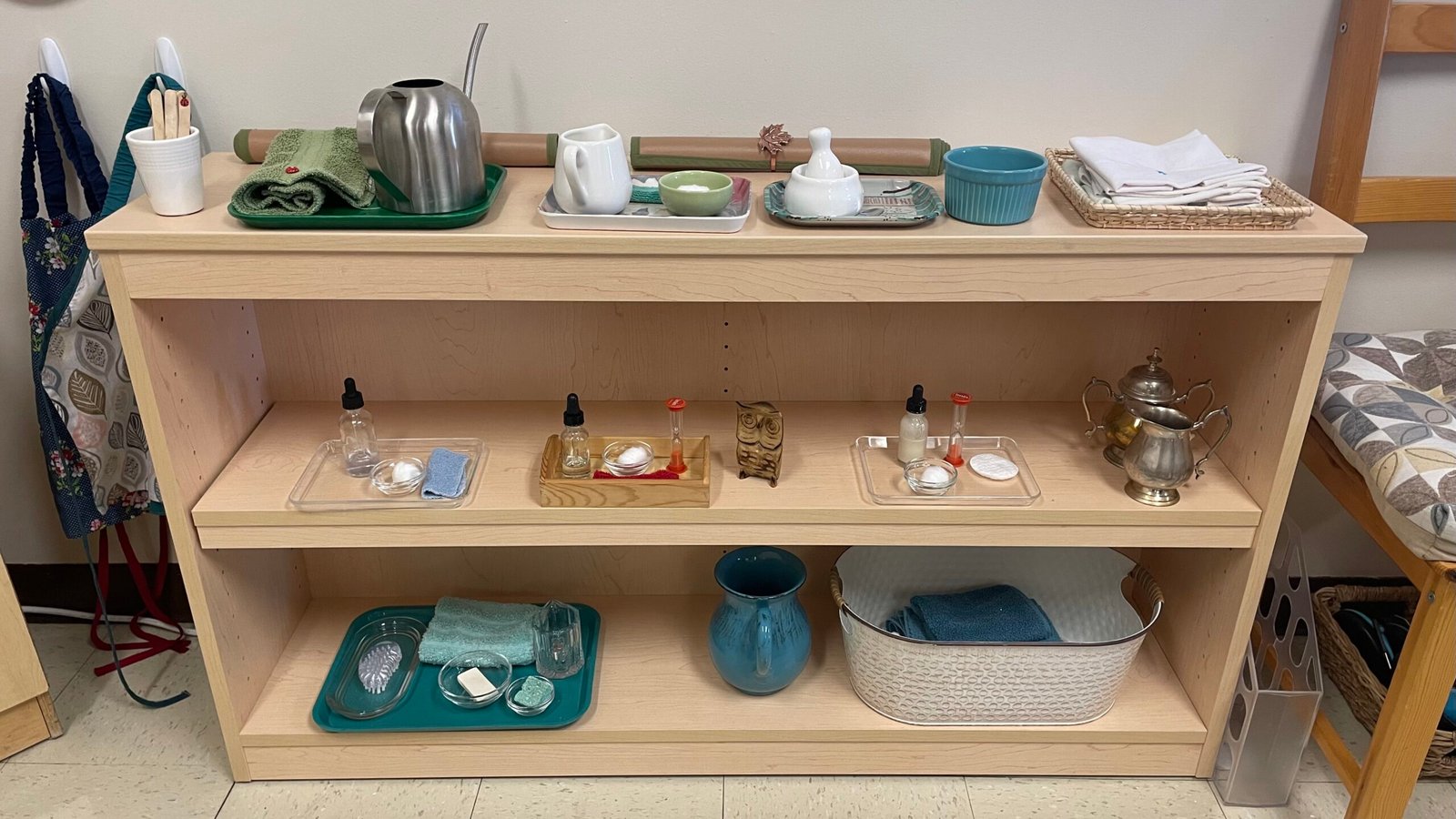
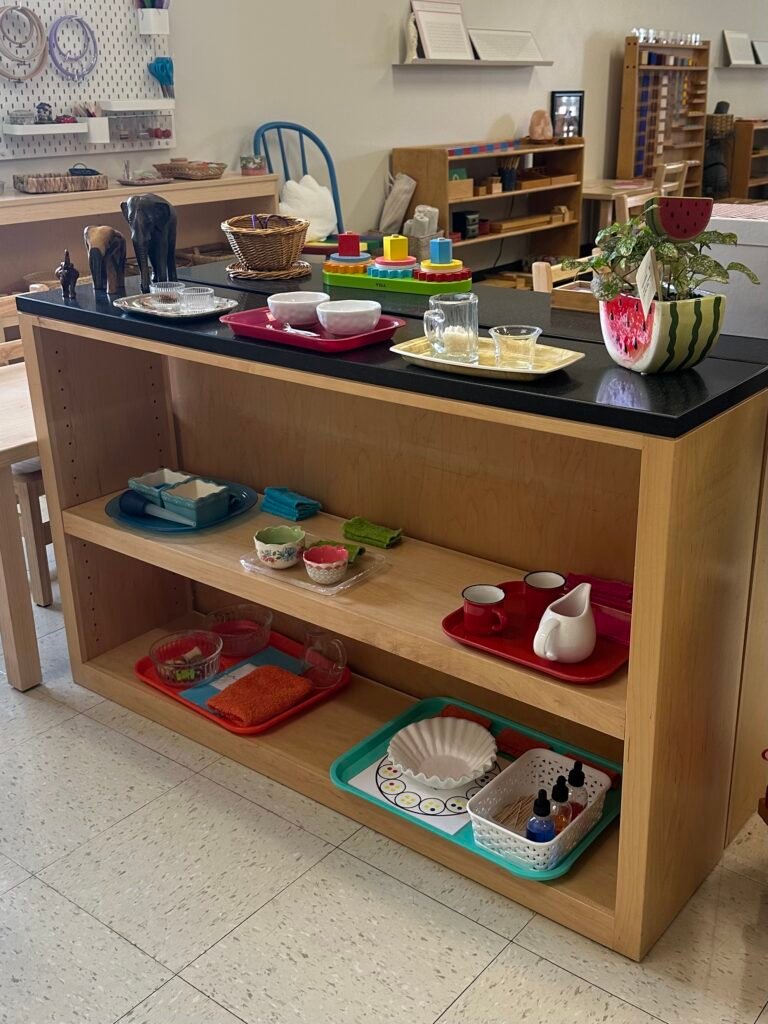
The shelves are carefully arranged.
Materials are presented in a particular sequence.
Routines are consistent.
It is not rigidity. And the goal is not simply to keep the classroom neat. The order of the environment is helping the child to organize their experience of the world.
Order Supports Independence
There is a beautiful connection between order and independence. When the environment makes sense, the child can do more for themselves.
They can find the work they are looking for without asking an adult.
They can gather materials and return them when they are finished.
They can move through familiar routines with confidence.
The ordered environment quietly communicates:
You know where to find it.
You know what to do.
You’ve got this.
This is why we prepare the environment. We aren’t simply arranging beautiful shelves. We are preparing an environment that supports self-construction and adaptation. An environment that allows the child to become and to belong.
Order is more than physical
When we talk about order, it is easy to think only about the physical things that surround us. But Montessori’s understanding of order is broader than that.
Young children develop an internal sense of order through movement, routine, and repeated experiences. Familiar sequences help them to understand what comes next. Consistent ways of doing things help them to orient themselves in their bodies and in their environment.
This is why a seemingly small change can sometimes feel very big to a young child.
Adults have years of experience to draw upon. We have accumulated thousands of impressions and have learned to adapt when something changes. The young child is still building that foundation.
What feels insignificant to us may be part of the structure they are using to understand their world.
What Does This Mean at Home?
The beauty of Montessori is that these principles don’t have to stay in the classroom.
We can think about order in our homes, too. And this doesn’t mean creating a perfectly organized house.
- Give everyday things a consistent home.
- Create a simple rhythm for mornings or bedtime.
- Keep the things we use most often accessible.
- Simplify a space so that the people who use it can care for it more easily.
Order is not about perfection. It is about creating an environment that works well for the people who live in it.
For children, an ordered environment can support orientation, security, and growing independence.
And for adults, thoughtful order can simply make life feel a little more manageable.
When we spend less time searching, deciding, and putting things back together, we create a little more space.
Space for connection.
Space for independence.
Space for peace.
Start Small
You don’t have to reorganize your entire home. Start with one small thing. Choose something you use every day and give it a home. Then, notice what happens when you consistently return it there.
Perhaps that small act of order makes the next part of your day just a little easier.
Because sometimes, creating more space for what matters begins with something as simple as putting something back where it belongs.
What could you put into order this week?
“Order is one of the needs of life which, when it is satisfied, produces a real happiness.”